

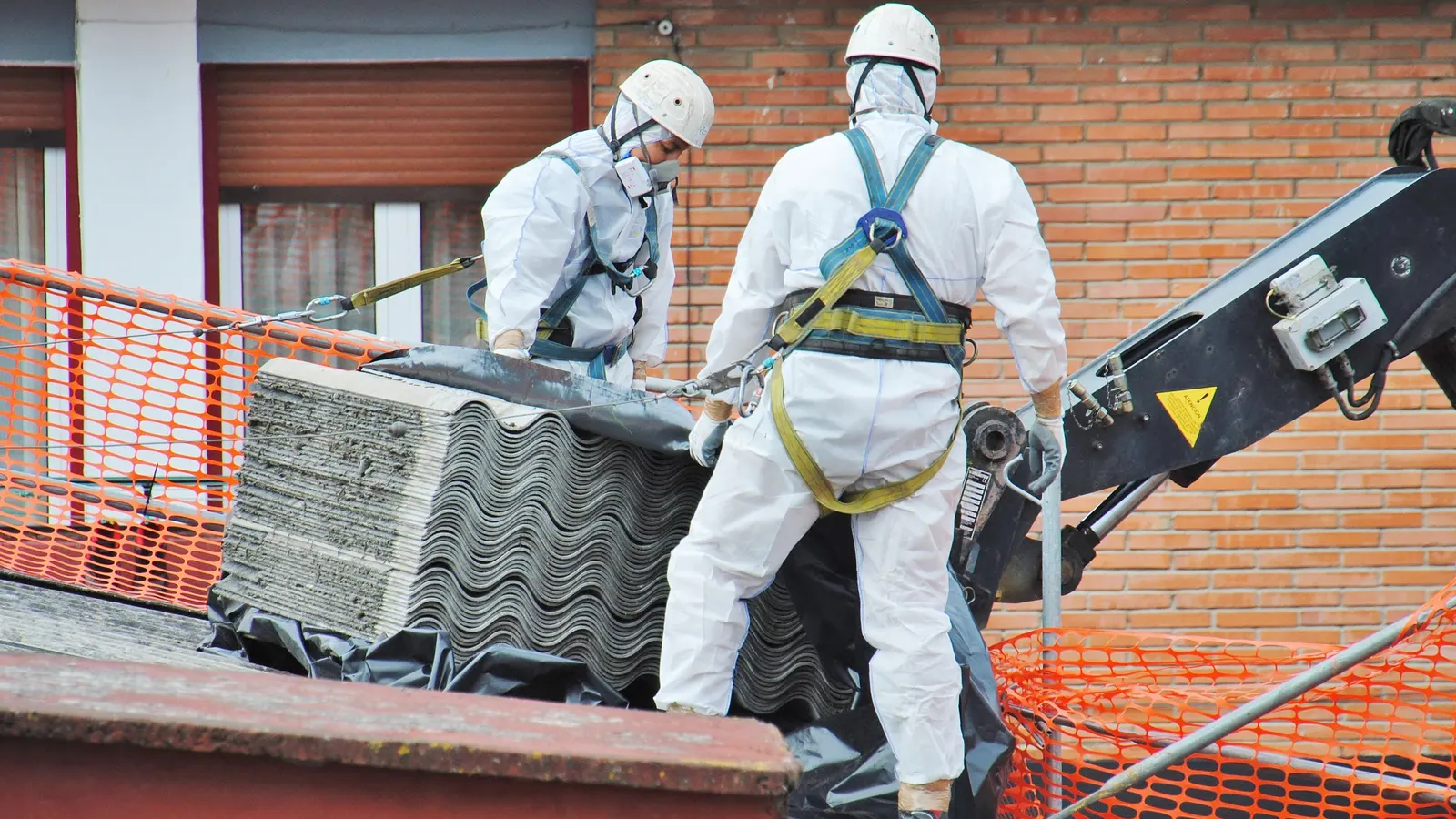
An asbestos inspection should resolve a specific property or project risk. In an occupied workplace, the priority is to locate materials that could be disturbed during normal use, cleaning or maintenance. Before refurbishment or demolition, the inspection must reach every part of the building fabric affected by the work. Where the concern is limited to one panel, tile, coating or sheet, targeted sampling may be sufficient.
I would not select a survey from its name alone. The planned work, building age, construction, affected rooms and access conditions all change what must be inspected. A report that does not follow the real work area can leave contractors facing unexamined risers, boxing, ceiling voids, ducts or floor layers after the project has started.
Match the survey to the building decision
A management survey is intended for premises that will remain occupied and broadly undisturbed. It identifies asbestos-containing materials that may be encountered during occupation and foreseeable maintenance. Its findings support the asbestos register, risk assessment and management plan.
A refurbishment survey is required where work will disturb the building fabric. Its boundary must follow the project rather than a convenient room list. Rewiring a school wing, replacing a boiler, stripping out a shop and altering a service riser each demand a different inspection strategy.
A demolition survey is more extensive because all asbestos-containing materials must be identified, as far as reasonably practicable, before structural demolition begins. Destructive access is normally required throughout the demolition area.
Targeted sampling answers a narrower question. It may be appropriate for an old vinyl tile, textured coating, cement sheet or damaged ceiling panel when no wider assessment is needed. Visual appearance alone cannot confirm whether a material contains asbestos.
Older buildings rarely follow the drawings
Buildings constructed or altered before 2000 may contain asbestos in products installed during several different phases of work. Common findings include asbestos insulation board around columns and risers, pipe insulation in basements and plant rooms, sprayed coatings above suspended ceilings, asbestos cement roofing and cladding, floor tiles, bitumen adhesives, soffits, fire-resistant panels, heater cupboards and textured coatings.
The difficult material is often not the obvious sheet or tile. It may be a packer behind a door frame, debris within a ceiling void, an insulating pad inside electrical equipment or a narrow strip of board concealed beneath later finishes. Alterations can also leave fragments from an earlier installation even where the main product has been removed.
Building age provides a useful starting point, not proof. Extensions, service upgrades and second-hand components can introduce materials from a different period. Previous reports should therefore be checked against the present layout and the work now proposed.
Access determines the value of the inspection
A surveyor can only report properly on areas that are included and reached. Locked plant rooms, live electrical equipment, occupied bedrooms, fixed furniture, sealed boxing, fragile roofs and unsafe voids all create limitations. Those limitations must be recorded clearly and resolved before anyone disturbs the affected area.
For intrusive work, access may require isolation of services, removal of panels, lifting of finishes, temporary opening-up or specialist access equipment. These arrangements should be agreed before the visit so that the survey does not stop at the very places the project will later expose.
Where destructive inspection is planned, the area may need to be vacant and isolated. The survey strategy should also address dust control, making good and the condition in which the area will be returned.
Establish the correct inspection scope
Tell us the property type, approximate age, present use and planned work. We will advise on the appropriate inspection and arrange the required survey or sampling.
We are an independent consultancy: survey, sampling and removal work is carried out by the vetted professionals we appoint.
What the survey scope should record
The written scope should identify the survey type, buildings, floors, rooms, external areas and building elements included. For refurbishment or demolition, it should follow drawings, a schedule of work or a clearly marked plan.
General wording such as accessible areas can be inadequate where the project will open enclosed construction. The scope should state whether the inspection includes ceiling voids, risers, ducts, floor build-ups, service penetrations, fixed equipment, external elevations, roofs and concealed structural elements relevant to the work.
It should also record known hazards, occupancy restrictions, access arrangements and any areas that cannot be inspected. An exclusion is not a finding that asbestos is absent. It is an unresolved area that must remain protected until it has been assessed.
Legal duties and recognised survey practice
Regulation 4 of the Control of Asbestos Regulations 2012 applies to those responsible for maintenance and repair of non-domestic premises and the common parts of multi-occupancy domestic premises in Great Britain. The duty includes determining whether asbestos is present, recording its location and condition, assessing the risk and maintaining arrangements to manage it.
HSG264, Asbestos: The survey guide, sets out recognised practice for planning, carrying out and reporting asbestos surveys. It places responsibilities on both the survey organisation and the client. The client must provide accurate information, define the purpose of the survey and check that the completed report is suitable for that purpose.
For asbestos surveying, the current accreditation and scope of the inspection organisation should be checked. Sample analysis should be performed by a laboratory whose current UKAS schedule covers the relevant asbestos identification activity. A logo alone does not establish that every service offered falls within an accredited scope.
Prepare the property before the visit
Collect previous surveys, asbestos registers, plans, refurbishment records and evidence of earlier removal. Mark the proposed work area and confirm access to plant rooms, roof spaces, service cupboards, basements and tenanted or occupied rooms.
Advise us of fragile roofs, confined spaces, live services, damaged materials, security requirements and permit systems. Keys, escorts and isolation arrangements should be available at the agreed time.
Do not drill, scrape, snap or lift a suspect material to assist identification. Keep people away from damaged debris and obtain competent advice before the area is cleaned or disturbed.
Arrange the inspection before disturbance begins
Provide the plans, previous records and details of the intended work. We will review the requirement and arrange an inspection with a scope suited to the property and project.
Read the limitations before the results
When the report arrives, first check that every building, room and work area within the agreed scope is listed. Then read the access limitations and exclusions. An unopened riser or sealed ceiling void may present a greater project risk than several identified materials in areas that will remain untouched.
Material locations should be precise enough for another person to find them without interpretation. Photographs, sample references, room descriptions and plans should agree. Any presumed material should be distinguishable from material confirmed by laboratory analysis.
For occupied premises, the findings should be transferred into the asbestos register and management arrangements. For refurbishment or demolition, the relevant information must reach designers, contractors and others who may disturb the building fabric before work begins.
Frequently asked questions
Which asbestos survey do I need?
A management survey is normally used for occupied premises and foreseeable maintenance. A refurbishment survey is required before work that will disturb the building fabric, while a demolition survey covers the full demolition area. Targeted sampling may be suitable when the concern is confined to one suspect material.
Can an old asbestos survey still be used?
Only where its purpose, inspected areas, access and findings remain suitable for the present decision. A management survey will not normally provide the intrusive coverage needed for refurbishment, and excluded areas must be assessed before work reaches them.
Can asbestos be identified from a photograph?
No. A photograph may help identify the likely product and plan safe access, but it cannot confirm asbestos content. Confirmation requires a representative sample taken under controlled conditions and analysed by a competent laboratory.
What information is needed before arranging an inspection?
Provide the property type, approximate construction date, present use, planned work, affected rooms and known access restrictions. Include previous surveys, asbestos registers, drawings and refurbishment records where available.